Weekly pool care cleaning and maintenance

Regularly checking your swimming pool water chemistry is essential for maintaining a clean, safe, and enjoyable swimming environment. Proper chemical balance ensures safe swimming conditions by preventing skin and eye irritation and eliminating harmful bacteria, viruses, and algae. It also protects your pool equipment and surfaces unbalanced water can corrode metal parts and damage finishes like plaster or vinyl liners, while correct calcium hardness levels help prevent scaling and erosion.
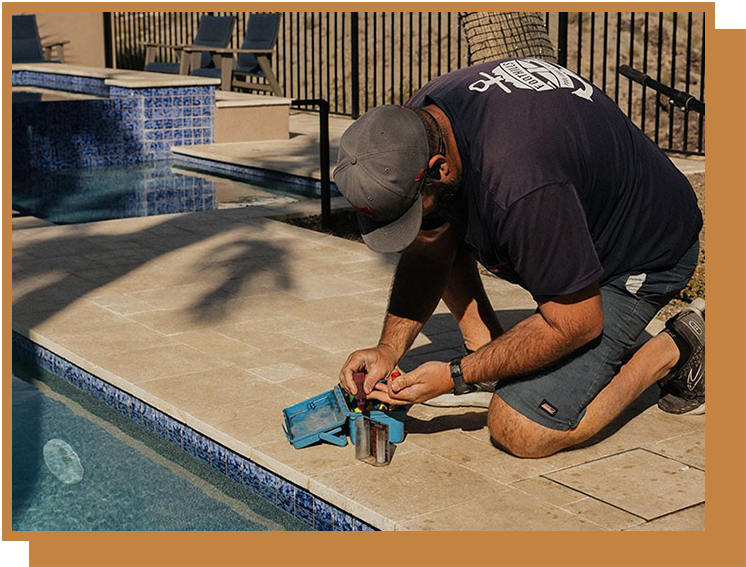
Foothills Pool Care & Repair uses LSI Water Chemistry Balancing by using Taylor water testing kits. These kits are tip of the spear when it comes to testing your pool water chemistry so that your pool technician puts in exactly what your pool needs.
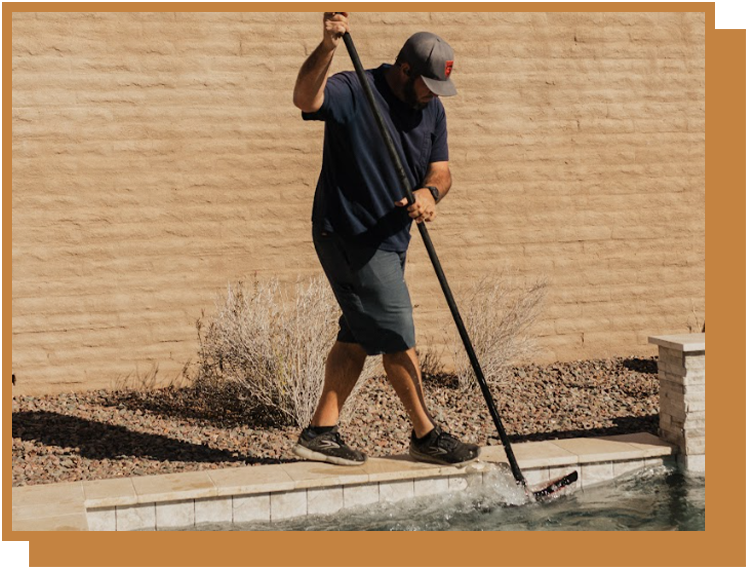
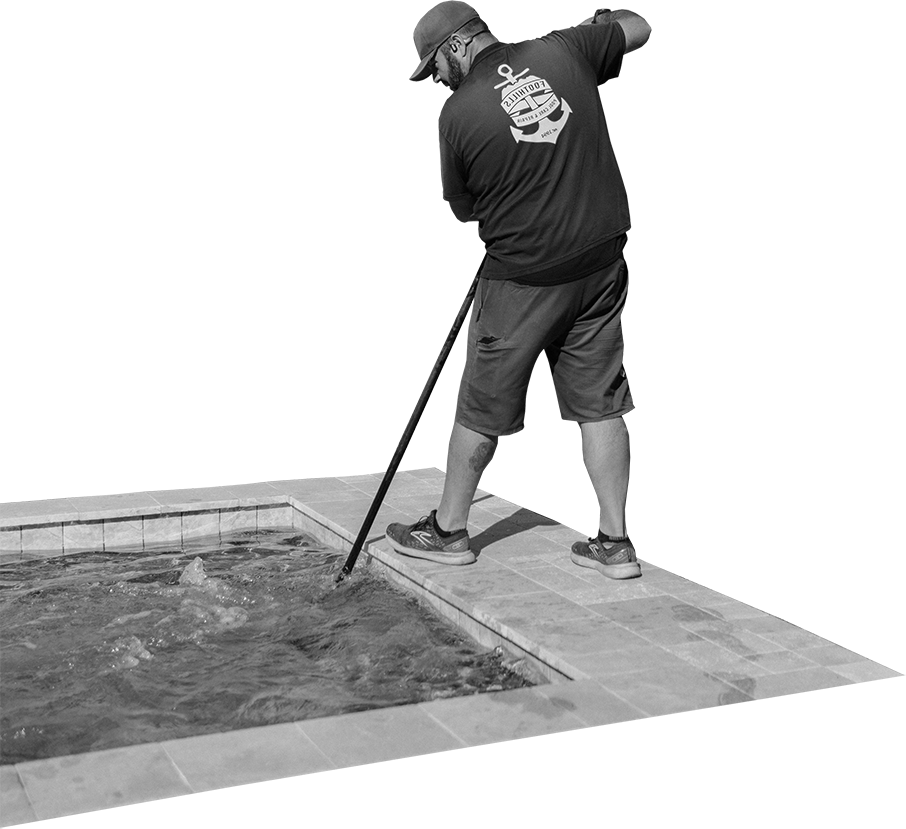
Sweeping the walls of your swimming pool helps prevent the buildup of algae, dirt, and debris that can cling to surfaces even when the water looks clean. Algae especially tends to grow in areas with poor circulation like corners, steps, and walls and regular brushing disrupts its growth before it can become a problem. It also prevents staining caused by organic matter or metals that settle on pool surfaces.
Additionally, brushing stirs up debris so it can be captured by the pool’s filtration system, improving overall water circulation and clarity. Even if you have an automatic pool cleaner, manual brushing is still necessary for spots the cleaner can’t reach.
Netting the pool surface removes floating debris like leaves, insects, pollen, and other organic material before it sinks to the bottom. Removing this debris quickly helps keep the water looking clean and inviting, and it reduces the strain on your pool’s filtration system. Left unattended, debris can break down in the water, leading to cloudiness, poor water quality, and extra chemical demand.
Netting the floor of the pool is just as important especially in areas where debris may have already sunk. This prevents the buildup of organic matter on the pool floor, which can cause staining, promote algae growth, and make the surface slippery or unsafe. Regular netting also helps improve water circulation by eliminating blockages that could affect your filter or pump performance.
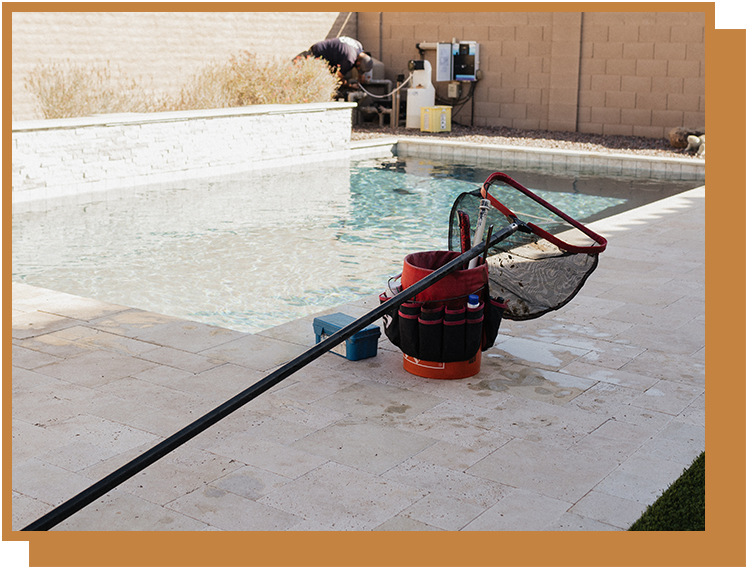
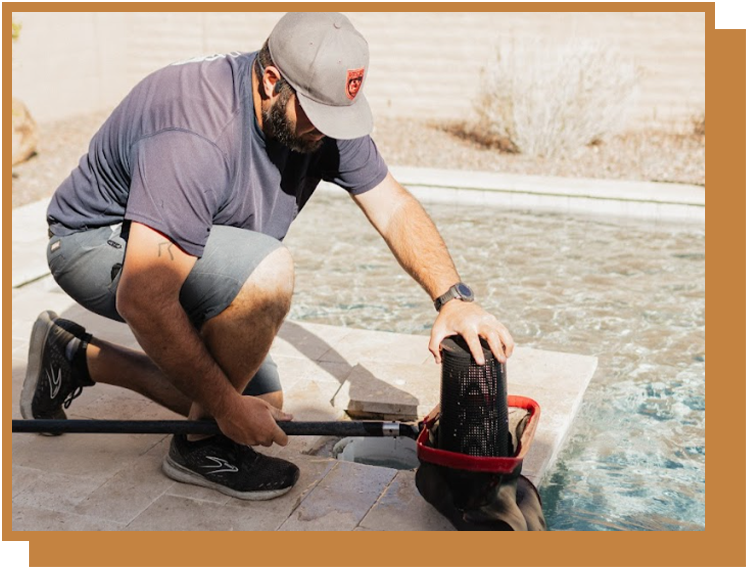
Emptying all the baskets in your swimming pool such as the skimmer basket, pump basket, and automatic cleaner basket is a crucial part of regular pool maintenance. When these baskets become full of leaves, bugs, and debris, they restrict water flow through your pool’s circulation system. This puts extra strain on your pump, reduces filtration efficiency, and can lead to cloudy or dirty water. Clogged baskets also force your equipment to work harder, increasing the risk of overheating or damage to your pump and other components.
Additionally, when debris sits in baskets for too long, it begins to break down and release organic material into the water. This can increase the demand for chlorine, contribute to algae growth, and even cause unpleasant odors. Keeping the baskets clear allows for better water circulation, which helps your chemicals work more effectively and keeps your pool clean and safe for swimmers.
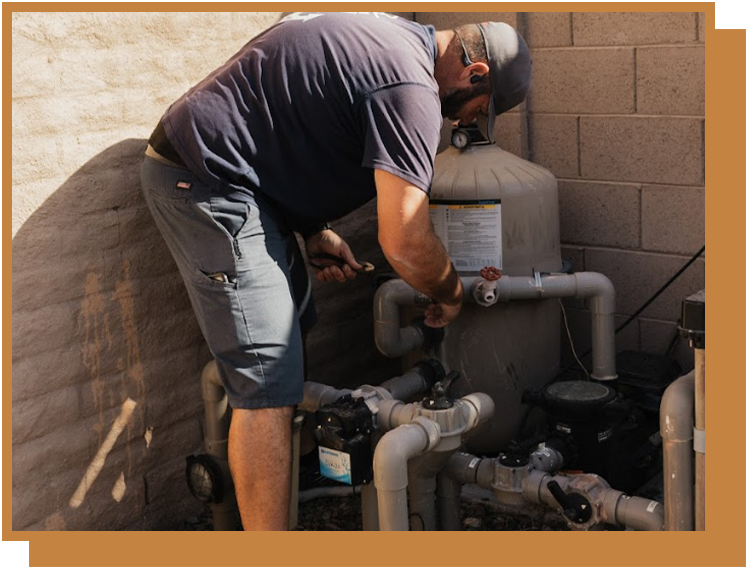
Ensuring your pool equipment is working properly is essential for keeping the water clean, clear, and safe. Your pump, filter, and other systems work together to circulate water, remove debris, and distribute chemicals. If any equipment fails, it can lead to cloudy water, algae growth, and uneven chemical levels.
Proper equipment operation also helps prevent damage to other components, saves on energy and chemical costs, and avoids costly repairs. Regular checks for leaks, unusual noises, or pressure changes help catch issues early and keep your pool running smoothly.
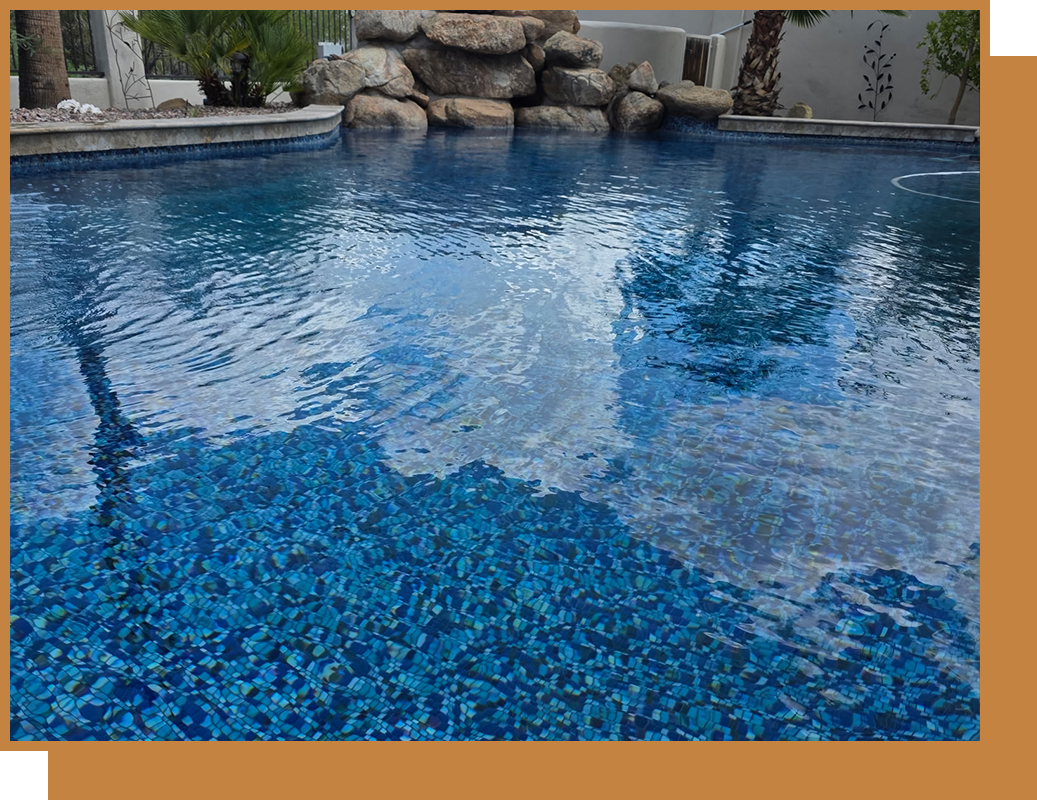
Checking the water level in your pool is important for keeping your pool running smoothly and preventing equipment damage. If the water level is too low, the pump can start sucking in air instead of water, which can cause it to overheat or become damaged. On the other hand, if the water level is too high, it can reduce the effectiveness of the skimmer, making it harder to remove debris from the surface. Keeping the water at the proper level typically about halfway up the skimmer opening ensures good circulation, effective filtration, and helps maintain chemical balance.
Checking the operation of your pool’s cleaning system whether it’s an in-floor system, suction cleaner, pressure cleaner, or robotic cleaner is important to ensure your pool stays clean, safe, and efficient. If the cleaning system isn’t working properly, dirt, leaves, and debris can build up on the pool floor and walls, leading to cloudy water, algae growth, and increased strain on your filtration system. A malfunctioning cleaner may also miss certain areas, allowing bacteria and organic material to accumulate. By regularly checking that your cleaning system is moving correctly, covering all areas, and isn’t clogged or damaged, you help maintain proper water circulation, reduce chemical demand, and avoid bigger maintenance issues. Keeping it in good working order also extends the life of your pool equipment and helps ensure a consistently enjoyable swimming experience.

We’d love to hear from you! Whether you have questions about our services, need a quote, or want to schedule a pool inspection, our team is here to help.


The good thing about Foothills Pool Care and Repair and Military Veteran Damien Lusting is their salt water system but more importantly when you need a repair or new equipment they will have the best prices. They take care of their customers like family. After all they’re a second generation family business. Call Damien and join the family!
Best pool care service in the valley. They treat you like family and never try to upsell you. I was a first time home buyer that came with pool. They sent their owner Damien over to show me how to use my pool, the equipment and even how to care/clean it. I go to them for all my service and chemical needs.
I went through a lot of pool care companies before finding Foothills. Most of the cleaners were trying to set a record on how fast they could do our pool and rarely took the time to scrub the sides or make sure the water was good. Foothills does all of that and sends me messages if there is any additional service needed. They hire amazing people and my pool always looks great.
Damien and his crew are THE BEST! When my pool filter broke while I was away on vacation, they gave me many options and walked me through replacement costs the entire time. When I came back, our pool was looking better than ever. They treat you like family here.
Damien, Aaron and the rest of the pool crew are some of the best people in the area for pool care. After buying a home, Damien came out and helped me figure out the best way to make the pool easy for me to take care of. Once we decided on replacing the filter system, the whole team was prompt with install and following up with me throughout the process. Would highly recommend them to anyone with a pool in the area